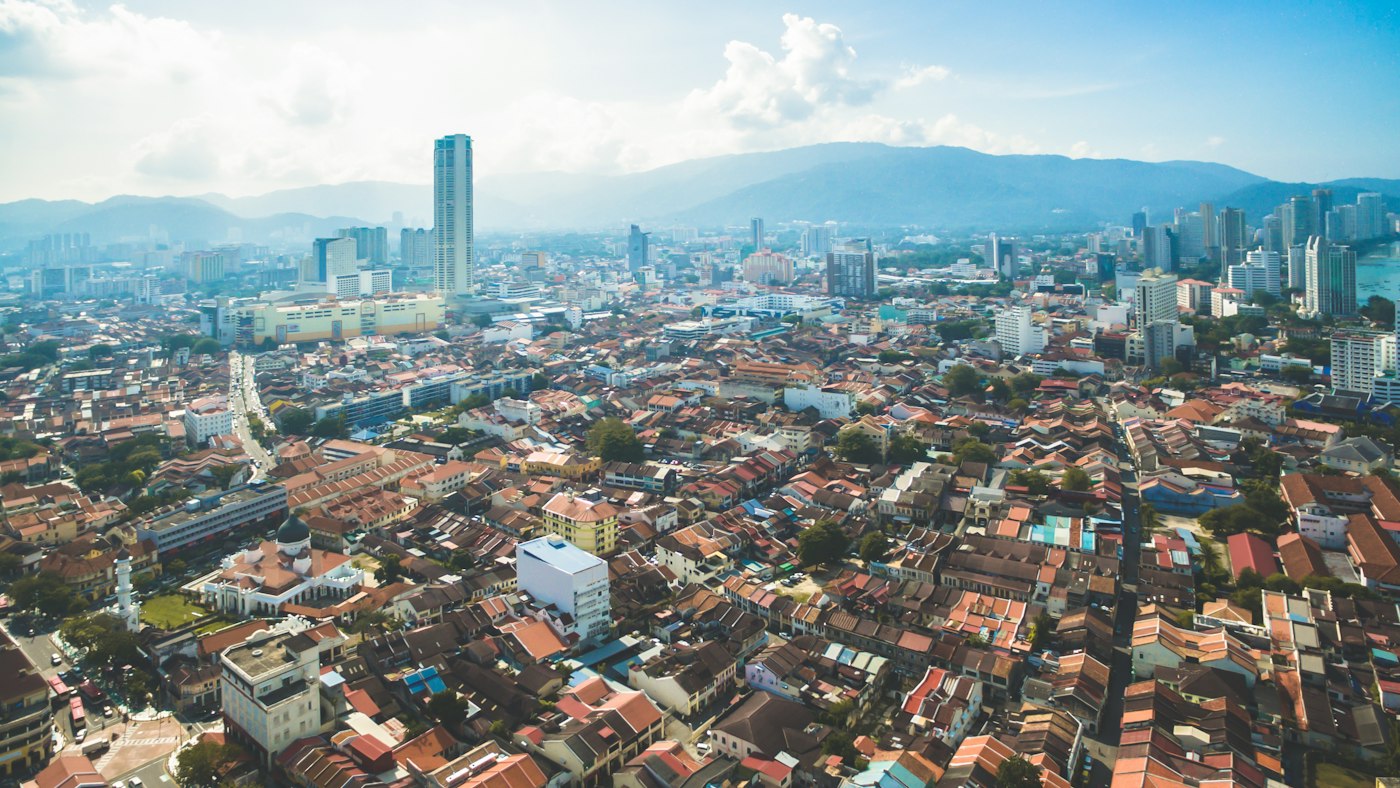
Are You Walking Into the MM2H Insurance Trap in Penang?
To the MM2H retirees, digital nomads, British and Australian expat families, and international executives who have chosen Penang's UNESCO heritage streets, tropical beaches, and world-class private hospitals over retirement in a cold country: there is a structural problem in how most expats here approach health insurance, and it costs families dearly.
Penang is extraordinary. Batu Ferringhi beach on weekends, roti canai at the morning market, your kids at Uplands or Dalat International, a genuine sense of community built over decades of expat life, it is one of Asia's most liveable cities for a reason. The MM2H visa was designed for people like you, and Penang's private hospitals, Gleneagles, Island Hospital, Penang Adventist, are genuinely world-class, with JCI accreditation, English-speaking doctors trained in the UK and Australia, and costs that are 40 to 70% cheaper than equivalent care in Singapore, the UK, or the US.
But beneath the surface of Penang expat life lies a healthcare reality that catches people off guard at exactly the wrong moment.
"it's really sub-standard Personal Accident insurance. And if you have a problem, you have to pre-pay the charges and apply to the company for reimbursement after the fact. If they dont agree to the charges, they do not pay you... If you have a problem they may not re-new the next year."
, cvco, Malaysia Expert on Expat.com, healthcare thread
The MM2H visa requires you to hold a Malaysian-issued health insurance policy before it can be endorsed, a global IPMI plan from Cigna, Bupa, or Allianz alone does not satisfy this requirement. So you buy a local Malaysian plan. And then you discover that local Malaysian health insurance is not what you expected: it is primarily reimbursement-based (you pay upfront and claim back), it caps annual benefits at figures that won't cover a serious illness, it excludes or severely limits pre-existing conditions, and it caps entry age at 70 to 75.
The families we speak to in Penang are usually one of three groups: MM2H visa holders who bought a local plan for compliance and assumed it was enough; working expats on employer cover that ends the day their contract does; or retirees who didn't buy coverage early enough and now face exclusions for conditions they didn't even know they had.
This guide explains the real landscape, and how to fix it.
Which international schools do expat families in Penang use?
The main choices are Uplands (IB), Dalat International (American/AP), POWIIS (British), Tenby Schools Penang (British), and Stonyhurst International School Penang (British/A-Levels), all concentrated in the Tanjung Bungah and Batu Ferringhi corridor on the island's north coast.
The International School of Penang (Uplands) in Batu Ferringhi is one of Malaysia's flagship IB World Schools, offering the IB Diploma Programme and the newly authorised Middle Years Programme (MYP) alongside IGCSE. Dalat International School in Tanjung Bungah runs an American college-preparatory programme with AP courses for the large US expat community. Prince of Wales Island International School (POWIIS) spans two campuses, primary at Tanjung Bungah, secondary boarding at Balik Pulau, delivering the full British curriculum through to A-Levels. Stonyhurst International School Penang (linked to the 1593-founded UK institution) and Tenby Schools Penang complete the British-curriculum cluster. Most families cluster in Tanjung Bungah and Batu Ferringhi, directly north of George Town and minutes from Gleneagles Penang and Penang Adventist Hospital.
Which private hospitals in Penang do expats use, and do they have English-speaking doctors?
Yes, all major Penang private hospitals have English-speaking doctors, most trained in the UK, Australia, or the US. The five expat-facing facilities are Gleneagles Penang, Island Hospital, Penang Adventist Hospital, LohGuanLye Specialists Centre, and Pantai Hospital Penang.
The main private hospitals used by Penang's expat community:
- Gleneagles Hospital Penang (1 Jalan Pangkor, George Town), 380 beds, JCI Gold Seal, IHH Healthcare network. Dedicated International Patients Centre with WhatsApp concierge, cashless admission, and direct billing with Allianz, AIA, AXA, Generali, Prudential, and MSIG.
- Island Hospital (308 Macalister Road, George Town), 600 beds, Penang's highest-ranked hospital in Newsweek World Best Hospitals. Full International Patient Services with digital pre-authorisation and nine Centres of Excellence including Cardiology and Cancer Care.
- Penang Adventist Hospital (465 Jalan Burma, George Town), 254 beds, JCI accredited (first hospital in Malaysia to receive JCI, 2007), not-for-profit Adventist network. Lower fees than the for-profit hospitals. Named among Asia's Top Private Hospitals 2025 by Newsweek.
- LohGuanLye Specialists Centre (238 Jalan Macalister, George Town), 276 beds, specialising in Oncology, Cardiology, Fertility, and Neurosurgery. International Desk with airport transfers and Indonesian/Japanese interpreters.
- Pantai Hospital Penang (Bayan Lepas), ~190 beds, near the airport on the south of the island. Partners with 14 insurance groups and 35+ TPAs including International SOS and MSH International.
"I had nasal surgery. I was in a private room in the hospital for 3 days and received excellent care. The whole bill cost me under RM7850 ($1800). In 2012, our health insurance in Chicago was RM4799 ($1100) per MONTH. Now we pay RM5678 ($1301) per YEAR, and we have much better coverage."
, Kirsten Raccuia, Sand in My Curls, expat blog, Penang
How does Penang's healthcare system compare to the UK, Australia, or the US?
Private healthcare in Penang is typically 40 to 70% cheaper than equivalent UK private care and 60 to 80% cheaper than the US on average, with similar clinical standards at the top hospitals and no meaningful wait times in the private sector.
A specialist consultation at Gleneagles or Island Hospital runs RM 250 to 600 (USD 55 to 135). A full day surgery case with private room runs RM 15,000 to 40,000 (USD 3,400 to 9,000). Compare this to UK private (where a hip replacement averages USD 13,900) or the US (USD 28,000+). Malaysia has consistently ranked among the most competitively priced private healthcare destinations in ASEAN, APHM (the Malaysian private hospitals association) noted in 2024 that Malaysia has held "the lowest pricing in ASEAN" for years.
The difference from UK NHS: no waits, no GP gatekeeper, direct specialist access. The difference from UK private or US: dramatically lower cost. The difference from Singapore: half the price for comparable JCI-accredited hospitals, 30 minutes across the bridge.
What are the main health risks for expats living in Penang?
The three significant local health risks for Penang expats are dengue fever (hyperendemic, 7,343 cases in 2023), seasonal haze from Indonesian fires (worst in September), and heat-related illness during the dry season.
Dengue: Penang is hyperendemic for dengue, a 4.5× spike brought case numbers to 7,343 in 2023 alone (from 1,621 in 2022). Dengue hospitalisation typically means 3 to 5 days in a private hospital with IV fluids and monitoring. At Gleneagles or Island Hospital, that bill reaches RM 8,000 to 20,000 (USD 1,800 to 4,500) for a straightforward case, more for complications. All major IPMI plans cover dengue as a standard acute illness.
Haze: Penang sits downwind of Sumatra's slash-and-burn farming season. September is the worst month, annual PM2.5 averages 16 µg/m³ but spikes to 34 µg/m³ in September. During severe trans-boundary haze events, AQI levels exceed 200 ("Very Unhealthy") and have historically exceeded 300. Asthma and COPD sufferers, children, and the elderly are highest risk. New arrivals often underestimate this.
Heat and humidity: Year-round 32 to 33°C with 80 to 90% humidity makes acclimatisation essential, especially for new arrivals from temperate climates. Malaysia's Ministry of Health recorded 56 heat-related illness cases and 2 deaths in the first five months of 2026 nationally. Outdoor workers, runners, and cyclists are at elevated risk.
The Three Mistakes That Cost Penang Expats the Most
Trap 1, The Two-Policy Problem (The MM2H Compliance Trap)
The MM2H visa requires you to hold a Malaysian-issued health insurance policy. Most new MM2H holders buy the cheapest qualifying local plan, assume the box is ticked, and move on. Then they actually try to use it.
"I tried to buy substantial insurance to ensure qualification but, as I was over 70, it was rejected. They accepted both my wife's and my own travel insurance for MM2H so long as it was world-wide... or ASEAN, but not excluding Malaysia."
, Davita, British Expats Forum, MM2H Medical Insurance thread
Local Malaysian health insurance policies typically cap entry at age 70 to 75. Applicants above that age face rejection or need a discretionary immigration exemption. Local plans also have low annual limits (~RM 200,000 to 500,000), are reimbursement-based (you pay upfront, claim back), can be non-renewed if you make claims, and cover Malaysia only. A local plan alone is inadequate coverage for a retiree with a serious illness.
The correct structure: a basic Malaysian-issued plan (AIA, Great Eastern, or Allianz Malaysia) to satisfy the MM2H compliance requirement, layered with a globally portable IPMI plan (Cigna Global, Allianz Care, AXA Global, Bupa Global) for genuine worldwide protection. The combined cost is higher, but the combined protection is real.
Trap 2, Employer Cover That Ends With Your Contract
Working expats in Penang's semiconductor, manufacturing, and professional services sectors typically hold employer-sponsored group plans. These plans are tied to your employment contract. The day you resign, are made redundant, or rotate to a new posting, the cover stops. Any condition diagnosed on that group plan is now a pre-existing condition for the next insurer.
A globally portable IPMI plan owned by you, not your employer, travels with your career. Conditions diagnosed while covered are covered on renewal. Your insurer cannot cancel your policy because you changed employers or countries.
Trap 3, Geographic Lock-in
Standard local Malaysian health insurance covers Malaysia only. The moment you travel home to the UK or Australia for a check-up, need specialist care not available in Penang, or face a medical emergency abroad, you are uninsured. Medevac from Penang International Airport (PEN) to the UK on a medical aircraft costs USD 90,000 to 280,000+. Local plans do not cover this. Most basic IPMI plans do.
Local Malaysian Plan vs Employer Cover vs Premium IPMI
Independent Broker. Zero Cost to You.
Expat Health Group is an independent specialist broker, not an insurer. We are not paid by you. Insurers pay our fee, which means our advice is free to you and our incentive is to find you the best plan, not the most expensive one.
For Penang and MM2H clients specifically, we navigate the dual-policy structure, advise on which Malaysian-issued local plan satisfies visa compliance at the lowest cost, and layer the right IPMI plan on top for genuine worldwide protection. We also advise on underwriting strategy, so your medical history results in the fewest exclusions possible.
Five Things Most Penang Expats Discover Too Late
- ⚠️
The #1 mistake MM2H holders make when buying Malaysian health insurance, and why a cheap local plan for visa compliance is one of the most expensive decisions you can make in the long run.
- 🌍
How to be covered in the UK, Australia, or the US during home-country visits, and why your local Malaysian plan leaves you completely exposed the moment you land at Heathrow or Sydney Airport.
- 💳
How to get cashless direct billing at Gleneagles Penang and Island Hospital, so you never have to pay RM 40,000 out of pocket and wait three months for reimbursement.
- 🦟
Why dengue fever hospitalisation can cost USD 1,800 to 4,500 at a private Penang hospital and what happens when your local plan's annual limit has already been used up by another admission.
- ✈️
Why buying directly from a Malaysian insurer (AIA, Great Eastern, Allianz Malaysia) means fighting a claims dispute alone, and how EHG fights it for you.
2026 Annual Premiums for Expats in Penang
Prices below are indicative annual premiums in USD for an expat living in Penang, Malaysia. Worldwide Excl. USA area of cover, approximately USD $1,000 to $1,500 deductible. Insurer panel: Cigna Global, Allianz Care, XN Global, NowHealth.
* Average annual premiums in USD. ~$1,000 to $1,500 deductible, Worldwide Excl. USA area of cover. Insurer panel: Cigna Global, Allianz Care, XN Global, NowHealth. Low = IP-only plans; Medium = mid-tier IP + limited outpatient; High = comprehensive IP+OP. Actual premiums depend on nationality, exact ages, plan selection, and underwriting. Rates sourced from live insurer rate engines, June 2026.
Common Questions from Penang Expats
Ready to compare plans for Penang?
Free comparison. No credit card. No obligation. Compare top international health insurance options for Penang in 60 seconds, then speak with a broker if you want help with the MM2H structure or underwriting.
Get instant prices from 10 leading insurers, compare side by side, then speak to a broker
100% free. No credit card. No obligation. Takes 60 seconds.
Compare International Health Insurance Plans
Get instant prices from 10 leading insurers, compare side by side, then download your personalised quote
↓ Enter your details to see your personalised plans