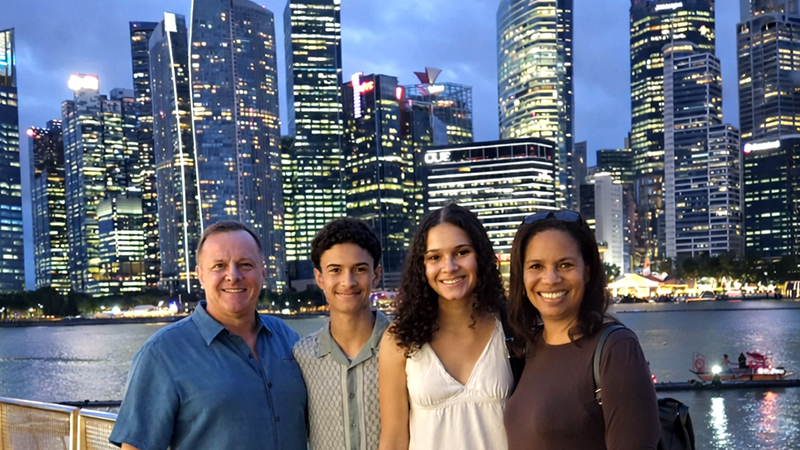
To the high-net-worth expat families, corporate executives, and diplomats relocating to (or already living in) Singapore:
Singapore's healthcare system is frequently ranked among the best in the world. It's pristine, hyper-efficient, and boasts medical technology that rivals the top facilities in New York, London, and Sydney. But there is a dark side to this medical utopia.
As a foreign resident, you do not have access to the heavily subsidized public healthcare system enjoyed by Singaporean citizens. You are placed in the "private patient" tier. And in this tier, the costs for major medical emergencies, complex surgeries, or chronic disease treatments are astronomical.
Many expats fall into what we call The Portability Trap. They arrive in Singapore with a generic corporate health plan provided by their employer. It feels like a massive perk, until they try to use it for something serious, or worse, until they change jobs, get laid off, or decide to move to a new country. Suddenly, that "comprehensive" employer plan vanishes overnight. Losing this coverage leaves your family dangerously vulnerable, potentially making you or your children completely uninsurable if a serious medical condition has developed in the meantime.
Relying solely on standard local coverage or a generic travel policy leaves families dangerously exposed to five-figure, and sometimes six-figure, hospital bills. It is a false sense of security that wealthy expats cannot afford to entertain.
The Local Reality: Raising Kids and Navigating Singapore Healthcare
The School Zone & Family Health
For expat families, life in Singapore often revolves around top-tier educational institutions like the Singapore American School (SAS), Tanglin Trust School, UWC South East Asia (UWCSEA), Dulwich College Singapore, and Stamford American International School. When your kids are enrolled here, you need premium, immediate pediatric care just a short drive from the school gates. You don't have time to navigate public clinic waitlists when your child has a severe fever or sports injury.
Your First Point of Call
Unlike the strict "GP-first" gatekeeping in the UK (NHS) or Australia (Medicare), Singapore's private sector offers absolute freedom. If you have premium insurance, you can go directly to a top specialist. Have a knee issue? Go straight to a leading orthopedic surgeon at Mount Elizabeth. Heart palpitations? Book an appointment directly with a senior cardiologist. There is zero bureaucracy, if your insurance allows it.
The Direct Billing Requirement
Expat families shouldn't be floating $50,000 hospital bills on a credit card while waiting weeks for an insurer to reimburse them. You need a policy that offers Direct Billing.
In Singapore, this means your insurance card acts like a VIP pass at the top premium hospitals, including:
- Mount Elizabeth Hospital (Orchard & Novena)
- Gleneagles Hospital
- Parkway East Hospital
- Raffles Hospital
- Farrer Park Hospital
At these facilities, the billing department settles the invoice directly with your insurer. You sign a piece of paper and walk out.
The Western Comparison
How does this compare to back home? Frankly, it's often better. The premium private hospitals in Singapore operate more like 5-star luxury hotels. Compare this to the declining state of the NHS in the UK, the massive out-of-pocket deductibles in the US, or the public wait times in Australia. In Singapore, you get near-zero wait times, VIP suites with private chefs, and fully English-speaking, internationally trained specialists.
The Local Health Triggers
Living in the tropics comes with unique health risks. The primary local health triggers in Singapore include seasonal Dengue fever outbreaks, rampant Hand, Foot, and Mouth Disease (HFMD) sweeping through international schools, and occasional severe respiratory issues caused by regional haze. Your insurance must cover these infectious diseases comprehensively, including potential inpatient isolation.
The Hidden Expat Traps
The Portability Trap (Expanded)
Let's reiterate the biggest mistake corporate expats make: relying 100% on their employer's HR policy. What happens if you get headhunted by a startup that doesn't offer the same tier of cover? What happens if you are restructured? What happens if you develop a chronic illness, and then lose your job? You become trapped. Local plans lock you into Singapore. Owning a private, globally portable policy is the ultimate executive safety net. It travels with you, regardless of who signs your paycheck or what country you move to next.
Regional Medical Evacuation
Singapore is the regional medical hub. But expats in Singapore travel frequently, skiing in Niseko, diving in Bali, or doing business in Jakarta. If a catastrophic accident happens in a developing neighboring country, you need a Medevac jet ready to immediately evacuate you back to the safety of Mount Elizabeth in Singapore (or direct repatriation back home). Most cheap policies strictly exclude international medical evacuation flights, leaving you stranded.
Standard Employer Cover vs Premium Portable Cover
| Feature | Standard Employer Cover | Premium Portable Cover |
|---|---|---|
| Global Portability | ❌ Ends when you leave the company | ✅ Stays with you worldwide |
| Direct Billing at VIP Hospitals | ⚠️ Limited network | ✅ Standard across Mount Elizabeth, Gleneagles, etc. |
| Medical Evacuation (Jet) | ❌ Rarely included | ✅ Standard inclusion |
| Choice of Specialist | ⚠️ Often requires GP referral | ✅ 100% open choice, direct access |
The Expat Health Group Difference
Expat Health Group (EHG) is not an insurance company. We are a specialized, independent brokerage acting exclusively on behalf of expat families.
Our Unique Mechanism
Using EHG costs you absolutely nothing. The insurers pay our fee. We don't peddle false promises about "secret rates." Instead, we ruthlessly audit the top global insurers, strip out the unnecessary fat and useless riders to lower your premiums, and act as your fierce, uncompromising advocate against the insurer if a claim ever gets complicated.
Why Singapore Expats Choose Our Quote Engine
Singapore Premium Expat Health Insurance Pricing Guide
Annual premium estimates in USD, based on a ~$1,000 to $1,500 deductible. Profiles: Individual (age 35), Couple (35+33), Family (35+33+5), Older Person (55).
| Tier | Individual | Couple | Family | Older Person |
|---|---|---|---|---|
| Low (IP Only) | 2,721 USD | 5,290 USD | 6,646 USD | 5,262 USD |
| Medium (IP+OP) | 5,955 USD | 11,644 USD | 14,757 USD | 10,488 USD |
| High (Comprehensive) | 12,429 USD | 24,424 USD | 29,710 USD | 21,227 USD |
* Pricing is indicative in USD based on top-tier global insurers with a ~$1,000 to $1,500 annual deductible. IP = Inpatient, OP = Outpatient. Rates are averages across the leading plans in each tier and are subject to change. Individual plan quotes may vary based on nationality, medical history, and exact plan selection.
Frequently Asked Questions
Q: Will my employer's insurance cover my family globally?
Almost never. Most corporate policies are localized to Singapore or strictly limited geographically. Once you leave the company, the coverage terminates. A globally portable policy guarantees you remain covered regardless of your employment status or location.
Q: Can I use direct billing at premium clinics like Gleneagles or Mount Elizabeth?
Yes. With a premium portable expat policy, direct billing at Singapore's top-tier private hospitals is standard. The hospital will settle the invoice directly with your insurer, meaning no massive out-of-pocket expenses for you.
Q: Do I need a GP referral to see a specialist in Singapore?
No. Unlike public healthcare systems in the UK or Australia, Singapore's private sector allows you to book appointments directly with specialists, provided your insurance policy allows open-access specialist consultations, which all top-tier expat plans do.
Get Your Free, No-Obligation Comparison Now
We provide a 100% free, no-obligation comparison of the top global insurers tailored to your specific family setup in Singapore. It takes just 60 seconds to secure your family's future.
Compare International Health Insurance Plans
Get instant prices from 10 leading insurers, compare side by side, then download your personalised quote
↓ Enter your details to see your personalised plans