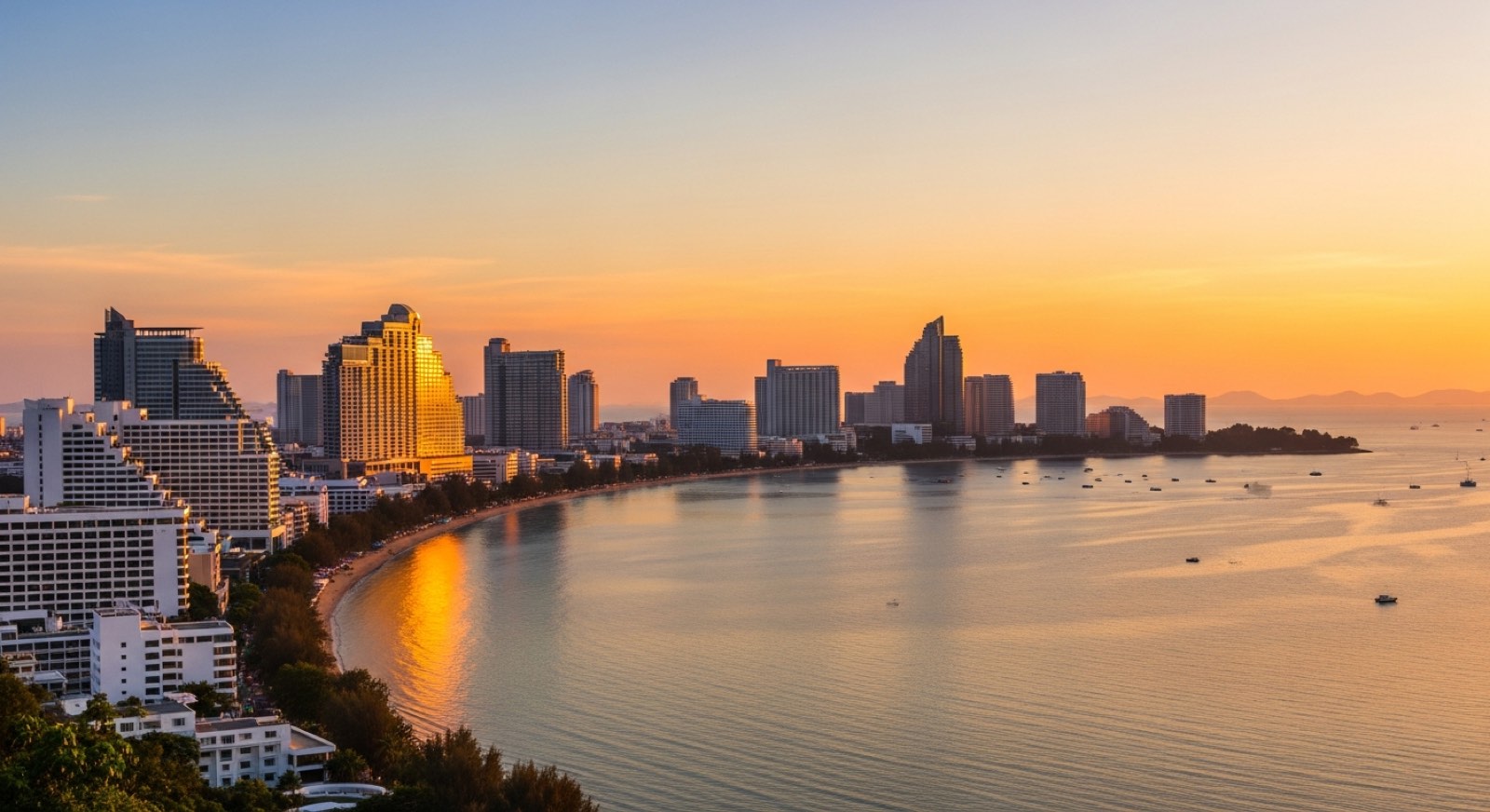
Pattaya Expat Health Insurance in 60 Seconds
Pattaya runs on private healthcare for foreigners. There is no GP-gatekeeper system, no NHS-style safety net for retirees, and Thailand's Universal Coverage Scheme is built for Thai nationals, not the tens of thousands of British, American, Australian, Scandinavian, and German retirees and long-stay expats who call Jomtien, Pratumnak, and East Pattaya home. The private hospitals are genuinely good; getting into them without a five-figure deposit is the entire point of insuring here.
The trap most retirees fall into: buying the cheapest local policy that clears Thailand's 3,000,000 THB (about US$83,000) O-A visa insurance requirement, then discovering years later it reprices steeply or simply won't renew once they cross an age band, usually right when they need it most. A globally portable IPMI plan gives you direct billing at Bangkok Hospital Pattaya, no deposit at the admissions desk, lifetime renewability past 70, and cover that follows you home for a long visit. Live 2026 rates for an expat in Thailand start around 1,670 USD a year for an individual on inpatient-only cover and 4,240 USD for someone 60 and over.
The sections below give you the essentials and the numbers. The full city deep-dive (hospitals, schools, the visa rule, the age-band trap) is at the end of the page.
Five Things Most Pattaya Expats Discover Too Late
- ⚠️
The #1 mistake Pattaya retirees make: buying the cheapest local policy that clears the O-A visa's 3,000,000 THB rule, then finding it excludes the condition they actually develop, or won't renew once they turn 70.
- 🏥
That a Thai hospital can ask for a deposit of 50,000 THB or more before treating anything beyond routine outpatient care, and will hold the bill against you until it is settled.
- 🩺
That there is no GP referral system at all in Thailand, so you walk straight into a specialist at Bangkok Hospital Pattaya, which is convenient, but every consultation is billed on its own.
- 📈
The age-banded repricing built into most local Thai retiree policies, which can double or triple your premium in your seventies exactly when you're most likely to need the cover.
- 🚁
That a serious accident or stroke may mean evacuation through U-Tapao or Suvarnabhumi to Bangkok or home, and standard local policies do not fund it.
How does a local Thai policy compare to employer cover and premium IPMI?
The "Employer / Corporate" column matters less in Pattaya than in Bangkok: most residents here are retired, self-employed, or long past the corporate posting stage, which is exactly why the middle column above is thin. When there is no employer to fall back on, the choice is really between a local Thai policy and true IPMI.
Five Things Every Pattaya Expat Should Know About IPMI
1. What is IPMI and why do I need it in Pattaya?
International Private Medical Insurance (IPMI) is a globally portable health plan built for people who live abroad long-term, retire abroad, or move between countries. Unlike a bare local Thai policy, bought only to satisfy the O-A visa's 3,000,000 THB inpatient rule, IPMI gives you direct billing at Bangkok Hospital Pattaya and Pattaya Memorial Hospital, real outpatient cover for the specialist visits Thailand's no-GP system encourages, and a policy that keeps renewing as you age rather than pricing you out at 70.
2. How does underwriting work for pre-existing conditions?
Most IPMI plans use either moratorium underwriting (conditions not treated in the past 2 to 5 years are covered after a clean waiting period) or full medical underwriting (a detailed health declaration at application). This matters more in Pattaya than in a younger expat market: retirees applying in their 60s and 70s are more likely to be managing cardiac, diabetic, or joint conditions, and the underwriting route you choose materially changes what gets covered. EHG advises which approach protects your specific history best.
3. What is the difference between inpatient-only and inpatient + outpatient cover?
Inpatient cover pays for hospital admissions, surgery, and major treatment. Outpatient cover adds specialist consultations, diagnostics, and prescriptions, which matters here because Thailand has no GP referral step to filter costs before they start: a specialist consultation at a private Pattaya hospital typically runs 1,000 to 2,000 THB (about US$28 to US$55) and diagnostics are billed on top. Without outpatient cover, routine cardiology or orthopaedic follow-ups, common for the retiree population in Jomtien and Pratumnak, come entirely out of pocket.
4. Can I keep my IPMI plan if I leave Pattaya?
Yes. A globally portable IPMI plan moves with you, whether you relocate to Bangkok, Chiang Mai, Bali, or return home for an extended stay. Conditions diagnosed while you lived in Pattaya remain covered on renewal, and your insurer cannot cancel the policy simply because you changed country. This is the structural advantage over a Thailand-only local policy, which stops the moment you leave, or a Social Security Fund plan, which is tied to one assigned hospital and ends when your work permit does.
5. How long does it take to get a quote and apply?
The quote engine below returns live prices from leading international insurers in under 60 seconds. Application typically takes 15 to 30 minutes, and cover can start within 24 to 48 hours of approval, far faster than sourcing an O-A visa-compliant policy through a local Thai agent. For retirees with existing medical history, EHG brokers work through underwriting with you to secure the strongest terms available.
2026 Annual Premiums for Expats in Pattaya
Prices below are indicative annual premiums in USD for an expat living in Pattaya, Thailand. Worldwide Excluding USA area of cover, approximately USD $1,000 deductible. Insurer panel: Simplecare, XN Global, Cigna Global, Allianz Care.
* Average annual premiums in USD. ~$1,000 deductible, Worldwide Excluding USA area of cover. Insurer panel: Simplecare, XN Global, Cigna Global, Allianz Care. Low = IP-only plans; Medium = mid-tier IP + outpatient; High = comprehensive IP+OP. Actual premiums depend on nationality, exact ages, plan selection, and underwriting. Rates sourced from live insurer engines, July 2026.
Common Questions from Pattaya Expats
Independent Broker. Zero Cost to You.
Expat Health Group is an independent specialist broker, not an insurer. We are not paid by you. Insurers pay our fee, which means our advice is free to you and our incentive is to find you the plan that actually pays your claim, not the cheapest one that clears a visa requirement.
We audit the top global insurers, confirm direct billing at Bangkok Hospital Pattaya and Pattaya Memorial Hospital before you commit, and fight for your claim when the insurer pushes back. You get the plan. We handle the underwriting, the paperwork, and the age-band comparisons most local Thai agents won't walk you through.
Ready to compare plans for Pattaya?
Free comparison. No credit card. No obligation. Compare top international health insurance options for Pattaya in 60 seconds, then speak with a broker if you want help choosing.
Get instant prices from 10 leading insurers, compare side by side, then speak to a broker
100% free. No credit card. No obligation. Takes 60 seconds.
Compare International Health Insurance Plans
Get instant prices from 10 leading insurers, compare side by side, then download your personalised quote
↓ Enter your details to see your personalised plans
Not convinced? Find out more about Pattaya
Everything above is the executive summary. What follows is the full picture of how healthcare in Pattaya actually works for a retiree or long-stay expat: the hospitals, the visa rule, the age-band trap, and what happens when you leave.
Are You Walking Into Pattaya's Visa-Box Trap?
To the retirees, long-stay expats, and remote-working families who call Pattaya home, in Jomtien, Pratumnak Hill, Na Jomtien, East Pattaya, and Wongamat: this guide is a direct conversation about a healthcare coverage gap that catches nearly every new arrival off guard, and it lands hardest on exactly the demographic that settles here.
Pattaya delivers on its promise. Sunrise over Jomtien Beach, the quieter pace up on Pratumnak Hill, a condo with sea views for a fraction of a Bangkok price, an actual social life among thousands of other retirees who made the same decision. The city earns the move, especially for anyone retiring on a fixed income. But underneath the lifestyle sits a healthcare reality that is structurally different from home, and it starts with what Thailand's insurance system asks of you just to stay.
The Non-Immigrant O-A retirement visa has required proof of health insurance since October 2019: currently 3,000,000 THB (about US$83,000) of inpatient cover per policy year, verified with an official Foreign Insurance Certificate. That number exists to keep uninsured retirees off Thailand's public purse, not to guarantee you a good policy. The trap is what happens next: many retirees shop for the cheapest plan that clears 3,000,000 THB, treat the box as ticked, and never look at it again.
"Most medical insurance providers stop covering you, after 60 years off age.", thailand4me, Expat Forum
That is not an isolated complaint. Local Thai retiree policies commonly use age-banded pricing that climbs sharply at 65, 70, and 75, and some insurers decline to renew altogether past a set age, which is precisely when a 70-something is statistically most likely to need the cover. The private hospitals themselves are genuinely capable: Bangkok Hospital Pattaya has held JCI accreditation since 2009. But capability and access are two different things, and access here runs through your insurer, not a government safety net.
This guide is for retirees and families who want to close that gap, permanently.
Which international schools do the small number of expat families in Pattaya choose?
Pattaya's expat population skews heavily toward retirees and long-stay residents rather than the corporate-relocation families more typical of Bangkok, so the school-age cluster is smaller but well served. Regents International School Pattaya, in East Pattaya, teaches a British curriculum through to IB with students drawn from more than 50 nationalities. St. Andrews International School, Green Valley, part of the Cognita Schools group, sits between Pattaya and Rayong near Lake Mabprachan and is known for a calmer, more spread-out campus setting. Garden International School, further along the Eastern Seaboard near Ban Chang, has served the international community since 1994 with a broad, balanced British-style curriculum. Families with children at any of these three tend to settle in East Pattaya or along the Sukhumvit corridor toward Rayong, within reach of Bangkok Hospital Pattaya rather than the retiree-heavy Jomtien and Pratumnak strip.
Do I need to see a GP first, or can I go straight to a specialist in Pattaya?
You go straight to the specialist. Thailand has no GP-gatekeeper model at all: private hospitals run every specialty as a walk-in department, and a long-time expat forum member summed up the difference for newcomers used to a home-country GP system:
"In Thailand however there is no GP system but instead nearly all doctors specialise.", thetefldon, Expat Forum
For a retiree population managing cardiac, diabetic, or orthopaedic conditions, that direct access is genuinely convenient: no referral letter, no waiting for a GP appointment first. The honest trade-off is that every consultation, scan, and follow-up is billed individually, so the convenience only stays affordable with outpatient cover behind it.
Which hospitals in Pattaya do internationally insured expats actually use?
The facilities that consistently handle internationally insured expats and retirees are:
- Bangkok Hospital Pattaya (Naklua): JCI-accredited since 2009, re-accredited in 2012, 2015, and 2022; 300 beds across 30 specialty centres including the region's only dedicated Heart Center; treats international patients from over 150 countries with direct billing at more than 100 insurers
- Pattaya Memorial Hospital (Second Road, central Pattaya): ISO-certified rather than JCI-accredited; a strong, more affordable option for routine cardiology, orthopaedics, general surgery, and maternity care
- Jomtien Hospital (Sukhumvit Road, south end): opened May 2020, 232 beds, the newest private facility in the city, with a 24/7 Emergency & Trauma Centre serving Jomtien, Pratumnak, and Na Jomtien residents directly
- Pattaya International Hospital (Soi Pattaya 4, central beachfront): serving the expat community since 1974, the longest-running international clinic in the city, with 24/7 emergency care and multilingual staff
- Banglamung Hospital (government): the public option many long-term retirees register with for the 30-baht Universal Coverage Scheme fee-for-basic-care, though English-speaking capacity and wait times vary widely
One retiree, describing how ordinary long-stay expats use the public option alongside private cover, put it simply:
"In Pattaya, almost all foreign retiree uses this 30 baht scheme at Banglamung Hospital.", Michael555, Expat Forum
That access exists, but it is a basic government facility, not a substitute for the kind of specialist and cardiac care Bangkok Hospital Pattaya provides. Direct billing arrangements with international insurers exist at Bangkok Hospital Pattaya, Pattaya Memorial Hospital, and Jomtien Hospital for the major global panels, including AXA, Bupa, Cigna, Allianz, and AIA. Always confirm the arrangement with your specific insurer before admission, since it can vary by treatment type and hospital.
How does private healthcare in Pattaya compare to the UK, US, or Australia?
Pattaya's leading private hospitals deliver Western-standard facilities and English-speaking specialists at a fraction of home-country cost, with none of the wait. One American retiree based in Pattaya reported paying roughly 68% less for a hip replacement than the same procedure would have cost in the United States, with a short wait and a satisfactory multi-day stay. That price gap is real and consistent across major procedures. The honest concession: unlike the NHS in the UK or Medicare in Australia, there is no reciprocal public safety net here for a foreign retiree. Every visit is either insured or self-funded, and the Universal Coverage Scheme available through Banglamung Hospital is a basic government service, not equivalent private-grade care.
What are the biggest local health risks for expats and retirees in Pattaya?
The dominant risks are age-related chronic conditions, road traffic accidents, and mosquito-borne disease, each of which points to a different gap in cheap local cover. Thailand's road safety record is genuinely poor: the WHO recorded a national road-traffic death rate of 25.4 per 100,000 people in 2021, ranking Thailand ninth-worst of 175 member countries, with motorcyclists making up 83.8% of those fatalities. Pattaya's coastal roads and rental-scooter culture carry that same national risk profile. Dengue fever is present year-round and peaks in the rainy season: Thailand logged 36,439 dengue cases and 33 deaths between January and mid-August 2025 alone, with Chonburi province, where Pattaya sits, among the affected areas. For the city's large retiree population, cardiac events, diabetes complications, and orthopaedic issues (a fall, a hip, a knee) are the everyday reality a policy needs to actually pay for; the dramatic accident scenario is the exception, not the rule. Heat and humidity year-round also mean heightened cardiovascular strain for older residents, particularly outside the cooler November-to-February stretch. A comprehensive plan should cover chronic-condition management, tropical-disease hospitalisation, and accident trauma equally.
The Mistakes That Cost Pattaya Retirees the Most
What's the biggest trap with buying a local policy just to clear the O-A visa rule?
The Visa-Box Trap: buying the cheapest policy that technically satisfies the 3,000,000 THB (about US$83,000) O-A retirement visa insurance requirement, and assuming that means you are properly covered. It doesn't. A policy engineered to hit a regulatory number, not to actually pay claims, can exclude the specific chronic condition you already manage, cap outpatient visits to almost nothing, and carry zero direct-billing relationships with Bangkok Hospital Pattaya or Pattaya Memorial Hospital. The Long-Term Resident (LTR) visa and the O-X visa set their own, separate minimums (the LTR accepts as little as USD $50,000 of cover), which adds to the confusion about what "enough" insurance actually looks like. A policy that clears the visa desk and a policy that clears an ICU admission are not automatically the same product.
What happens to my health cover once I cross an age threshold in Pattaya?
This is the second half of the trap, and it is where it bites hardest. Many local Thai retiree policies use age-banded pricing that jumps at 65, 70, and 75, and some insurers simply stop offering renewal past a set age. A retiree who bought a compliant policy at 60 can find themselves effectively uninsurable at 72, right as cardiac and orthopaedic risk climbs. Premium IPMI plans (Bupa Global, Cigna Global, Allianz Care, AXA Global, MSH) are built around lifetime renewability instead: once you are on the plan, your insurer cannot simply decide you have become too old to keep.
How does medical evacuation work from Pattaya if I need treatment I can't get locally?
For cases beyond what Bangkok Hospital Pattaya can handle (complex oncology, transplant, advanced neurosurgery), expats are typically transferred to Bangkok's larger hospital network, roughly 90 minutes to two hours by road, or evacuated by air. U-Tapao International Airport (UTP), the dual-use airport serving Pattaya and Rayong directly, handles regional medical transfers including paediatric incubator transport, with repatriation arrangeable within hours by helicopter or jet; Suvarnabhumi in Bangkok is the hub for intercontinental transfers. Costs scale steeply with distance and acuity: a basic regional helicopter transfer runs roughly US$12,000 to US$25,000, a fixed-wing transfer can exceed US$50,000, and a full intercontinental evacuation requiring ICU-level care back to the US or Europe can run US$120,000 to US$180,000 or more. Standard local Thai retiree policies do not fund this. For anyone building a genuinely long-term life in Pattaya, Medevac cover is not an optional extra.