Milan Expat Health Insurance in 60 Seconds
Italy's public system, the SSN, is genuinely good once you're in it: Lombardy's hospitals are among Europe's best-resourced. Getting in is the problem. Registration can take two weeks to two months after you land, non-EU arrivals wait on a permesso di soggiorno first, and once registered you still need a GP referral (an impegnativa) before any specialist will see you.
Milan's SSN and its private supplementary funds (Unisalute, Previmedical-administered plans) work well inside Italy but stop protecting you the moment you leave the country. A globally portable IPMI plan gives you self-referred access at Humanitas, San Raffaele, and Galeazzi, covers the EUR 100-200 (about US$110-220) private GP visits while you wait for SSN registration, includes evacuation from Malpensa Airport, and moves countries with you. Live 2026 rates for an expat in Milan start around 1,651 USD a year for an individual and 4,692 USD for a family of four on inpatient-only cover.
The sections below give you the essentials and the numbers. The full city deep-dive (schools, hospitals, the traps) is at the end of the page.
Five Things Most Milan Expats Discover Too Late
- ⚠️
The #1 mistake expat families make in Milan: relying on Italy's SSN or a private polizza integrativa and discovering it's Italy-only, pays nothing outside the EU, and ends the day your employer contract does.
- 🪪
That you cannot access most healthcare, public or private, until you have a codice fiscale, and non-EU nationals face a real SSN registration gap after landing, often two weeks to two months while the permesso di soggiorno is processed.
- 🩺
How to route around Lombardy's four-to-twelve-week specialist waiting list with self-referred private access at Humanitas, San Raffaele, or Galeazzi.
- 🚨
The hidden exclusion in Italian employer health funds (the fondo sanitario) that leaves your family with no cover the day your Milan contract ends, when any diagnosed condition becomes pre-existing.
- 🌍
How to guarantee global portability so a move to London, Dubai, or home never resets your cover or your pre-existing-condition clock.
How does Italy's SSN compare to employer cover and premium IPMI?
Five Things Every Milan Expat Should Know About IPMI
1. What is IPMI and why do I need it in Milan?
International Private Medical Insurance (IPMI) is a globally portable health plan for people who live, work, or move between countries. Unlike the SSN (excellent inside Italy, GP-gatekept, and Italy-only) or a supplementary polizza integrativa (also Italy-tied and often ending with your employer), IPMI follows you permanently. In Milan it gives you self-referred private access at Humanitas, San Raffaele, and Galeazzi, plus the outpatient GP cover that matters most in your first weeks, before your SSN registration and codice fiscale come through.
2. How does underwriting work for pre-existing conditions?
Most IPMI plans use either moratorium underwriting (conditions not treated in the past two to five years are covered after a clean waiting period) or full medical underwriting (a detailed health declaration at application). Italy's SSN covers every registered resident regardless of history, but the private supplementary market underwrites separately, and a fondo sanitario tied to your employer disappears entirely the day you leave the company. EHG advises which underwriting approach is most favourable for your specific medical history, one of the most valuable things a specialist broker does.
3. What's the difference between inpatient-only and inpatient + outpatient cover?
Inpatient cover pays for hospital admissions, surgery, and major treatment. Outpatient cover adds GP visits, consultant appointments, diagnostics, and prescriptions. This matters in Milan because a private specialist visit runs EUR 150-300 (about US$165-330), and a private MRI runs EUR 150-350 (about US$165-385), all pay-on-the-day without insurance. Outpatient cover adds to the annual premium but removes that sting, and skips the SSN's own ticket co-payment (often EUR 25-50, about US$28-US$55, per visit or diagnostic panel) and the impegnativa referral slip it requires first.
4. Can I keep my IPMI plan if I leave Milan?
Yes. That is the entire point of a globally portable IPMI plan. Whether you rotate to London, Dubai, Singapore, or back home, your plan travels with you. Conditions diagnosed in Milan stay covered on renewal. Your insurer cannot cancel your policy because you moved countries. This is the fundamental advantage over Italy's SSN, over a supplementary polizza integrativa, and over an employer fondo sanitario tied to your contract.
5. How long does it take to get a quote and apply?
The quote engine below gives you live prices from 10 leading insurers in under 60 seconds. Application typically takes 15-30 minutes. Cover can start within 24-48 hours of application approval, far faster than the two weeks to two months it can take to complete SSN registration in Milan, or the wait for a permesso di soggiorno if you're a non-EU national. For families with complex medical histories, EHG brokers guide you through underwriting to maximise your coverage terms.
2026 Annual Premiums for Expats in Milan
Prices below are indicative annual premiums in USD for an expat living in Milan, Italy. Worldwide Excluding USA area of cover, approximately USD $1,000 deductible. Insurer panel: Simplecare, XN Global, Cigna Global, Allianz Care.
* Average annual premiums in USD. ~$1,000 deductible, Worldwide Excluding USA area of cover. Insurer panel: Simplecare, XN Global, Cigna Global, Allianz Care. Low = IP-only plans; Medium = mid-tier IP + limited OP; High = comprehensive IP+OP. Actual premiums depend on nationality, exact ages, plan selection, and underwriting. Rates sourced from live insurer engines, July 2026.
Common Questions from Milan Expats
Independent Broker. Zero Cost to You.
Expat Health Group is an independent specialist broker, not an insurer. We are not paid by you. Insurers pay our fee, which means our advice is free to you and our incentive is to find you the best plan, not the most expensive one.
We audit the top global insurers, strip unnecessary riders, and fight for your claim when the insurer pushes back. You get the plan. We handle the paperwork, the underwriting, and the direct-settlement arrangements at Humanitas, San Raffaele, and Galeazzi.
Ready to compare plans for Milan?
Free comparison. No credit card. No obligation. Compare top international health insurance options for Milan in 60 seconds, then speak with a broker if you want help choosing.
Get instant prices from 10 leading insurers, compare side by side, then speak to a broker
100% free. No credit card. No obligation. Takes 60 seconds.
Compare International Health Insurance Plans
Get instant prices from 10 leading insurers, compare side by side, then download your personalised quote
↓ Enter your details to see your personalised plans
Not convinced? Find out more about Milan
Everything above is the executive summary. What follows is the full picture of how healthcare in Milan actually works for an expat family: the SSN, the schools, the hospitals, and the traps.
Are You Walking Into Milan's Tessera Sanitaria Trap?
To the expat families, finance and fashion executives, and mobile professionals calling Milan home, in Brera, Porta Venezia, Navigli, Porta Romana, Affori, and the Opera-Rozzano corridor south of the city: this guide is a direct conversation about the healthcare coverage gap that catches nearly every new arrival off guard.
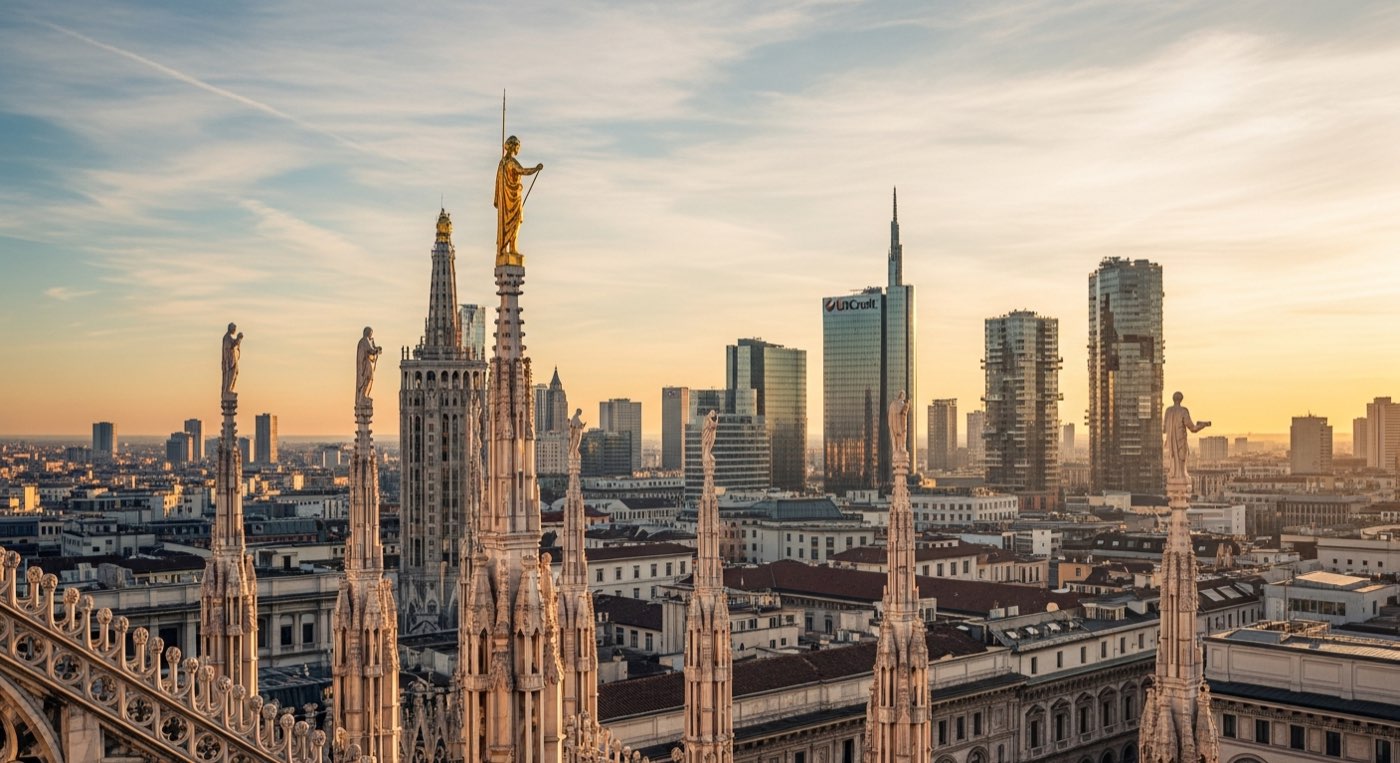
Milan delivers. Aperitivo along the Navigli canals at dusk, the Duomo's rooftop forest of spires at golden hour, the Salone del Mobile crowds filling Brera every April, a Sunday derby at San Siro. The city earns the move. But under the surface of Milan expat life runs a healthcare reality that is slower to access than most families expect when they land, and it starts with a card that doesn't travel: the tessera sanitaria, Italy's national health card.
Italy's Servizio Sanitario Nazionale (SSN) is genuinely strong once you're inside it, and Lombardy runs some of the best-funded public hospitals in the country. The catch is getting registered. You need a codice fiscale before you can do almost anything administrative in Italy, including applying for the codice fiscale itself, and non-EU nationals then wait on a permesso di soggiorno. Between landing and an effective SSN registration, expats commonly go uncovered for two weeks to two months, longer if the permesso is delayed. Once registered, the SSN is GP-gatekept: you need a referral, an impegnativa, from your assigned medico di base before any consultant will see you.
"the Italian system works. Not perfectly, and certainly not efficiently.", RickZullo, Expat.com forum
That verdict lines up with the data. In InterNations' 2023 Expat Insider survey, Milan ranked last of 49 cities worldwide, scoring particularly poorly on ease of dealing with bureaucracy, opening a bank account, and securing a visa, and 56% of expats said they were dissatisfied with the local air quality, against 17% dissatisfaction globally. None of that means the medicine is bad. It means the paperwork between you and the medicine is the real obstacle, and that's exactly the gap a broker-arranged IPMI plan is built to close.
The private tier is genuinely excellent. Humanitas is JCI-accredited, San Raffaele runs 1,350 beds and full transplant and neurosurgery programmes, and Galeazzi is one of Europe's leading orthopaedic centres. But that access is not automatic, and the second trap is portability. Italy's SSN and its supplementary polizze (Unisalute, Previmedical-administered funds) cover you in Italy only. Abroad, EU trips get limited emergency reciprocity and non-EU trips get essentially nothing. Neither the SSN nor an employer fondo sanitario follows you to London, Dubai, or home.
This guide is for families who want to fix that, permanently.
Which international schools do most expat families in Milan choose?
The most popular are the American School of Milan, St. Louis School, and the International School of Milan, each anchoring a different part of the city where expat families tend to cluster.
The American School of Milan (ASM) runs a K-12 American curriculum alongside the IB Diploma from its campus in Noverasco di Opera, south of the city, drawing families into Opera and Rozzano, the same corridor where Humanitas Research Hospital sits. St. Louis School teaches the British National Curriculum (IGCSE, A-Levels) plus the IB Diploma across multiple central campuses, popular with families in Brera, Porta Venezia, and the centro storico who want to stay walkable to the city. The International School of Milan (ISM), based in Baranzate to the northwest, is the only school in the metro area running solely the full IB continuum from primary through diploma. Families who prioritise the school run over the commute increasingly choose the Affori and Niguarda area north of the centre, or Porta Romana to the south, both well served by school bus networks.
Do I need to see a GP first, or can I go straight to a specialist in Milan?
Through the SSN, you almost always need a GP referral first. Italy runs a gatekeeper model: your medico di base (the GP you're assigned on SSN registration) must issue an impegnativa, a referral slip, before a public specialist will see you, and the same slip usually applies for subsidised specialist visits even outside your own practice. The frustration is common enough that it shows up directly in expat forums:
"you can wait months for a test in public hospitals but the service is generally efficient.", Cesar77, Expat.com forum
Private specialists bypass the impegnativa entirely, at a private cash rate of EUR 150-300 (about US$165-330) per consultation. An outpatient IPMI plan covers those visits directly and gives you self-referred access, so you are not stuck choosing between a months-long queue and paying cash every time.
Which hospitals in Milan do internationally insured expats actually use?
The private and international-facing hospitals that consistently handle internationally insured expat families are:
- Humanitas Research Hospital (Rozzano, southern Milan): JCI-accredited and an IRCCS scientific institute, with a comprehensive cancer, orthopaedic, and cardiac programme
- Ospedale San Raffaele (Via Olgettina, Città Studi): 1,350-bed IRCCS university hospital affiliated with Vita-Salute San Raffaele University; strong in transplant, neurosurgery, and cardiology
- Istituto Europeo di Oncologia / IEO (Via Ripamonti): one of Europe's leading dedicated cancer centres, founded by oncologist Umberto Veronesi
- IRCCS Istituto Ortopedico Galeazzi-Sant'Ambrogio (San Siro): a specialist orthopaedic and spine hospital, part of the Gruppo San Donato network
- Fondazione IRCCS Ca' Granda Ospedale Maggiore Policlinico (Via Francesco Sforza, city centre): Milan's oldest and largest public teaching hospital, and its major trauma centre
- Clinica Columbus (Via Michelangelo Buonarroti, Sempione/CityLife): a private clinic within the Gruppo San Donato network with an international-patient department
Humanitas, San Raffaele, and Galeazzi all appear in the international facility networks that insurers like Bupa Global and Cigna Global publish, and premium IPMI plans arrange cashless inpatient settlement across the group. One honest caveat: even where inpatient direct settlement exists, outpatient consultations and diagnostics in Milan are usually pay-on-the-day and reclaimed afterwards. Always confirm the arrangement with your insurer before admission.
How does private healthcare in Milan compare to the UK, US, or Australia?
Milan's private and IRCCS hospitals deliver specialist depth on par with major UK and US academic centres, at a fraction of US self-pay cost. A private specialist consultation runs EUR 150-300 (about US$165-330) here versus $250-450 self-pay in the US for a comparable appointment, and a private MRI at EUR 150-350 (about US$165-385) compares with $1,000-3,000 self-pay in the US for the same scan. One expat who has used both systems put it simply:
"I am told that the hospitals in Milano (in the North) are the best there are.", donda1010, Expat.com forum
That reputation is deserved for acute and specialist care. Where it's honest to concede a gap: registering for the SSN, navigating the impegnativa system, and dealing with Italian-language paperwork add real friction that a UK NHS registration or a US insurer portal doesn't. For a family settled permanently in Milan and comfortable in Italian, a good SSN registration plus a supplementary polizza can work. It only fails the day you need care, or a claim handled, outside Italy.
What are the biggest local health risks for expats in Milan?
The most cited risks are air pollution, traffic, and the Po Valley's damp winter climate, all manageable with the right outpatient cover.
Milan sits in the Po Valley, a basin ringed by the Alps and Apennines that traps vehicle and industrial emissions; in February 2024 the city recorded fine particulate (PM2.5) levels 24 times the WHO guideline, and 56% of expats surveyed by InterNations said they were dissatisfied with local air quality, versus 17% dissatisfaction globally. Doctors here link sustained exposure to more respiratory irritation and aggravated asthma, particularly in children and older residents, which is why outpatient cover for GP visits, inhalers, and allergy management earns its keep. Traffic is the second factor: central Milan runs the Area C congestion charge specifically to manage vehicle density, and the city's dense traffic raises the everyday risk of minor injury that sends a family to an emergency department. The Po Valley's winter fog and damp cold, finally, keep respiratory infections circulating through a long flu season, making prescription and telehealth cover worth having, not optional.
The Mistakes That Cost Milan Expats Tens of Thousands
What's the biggest trap with relying on Italy's SSN or a polizza integrativa in Milan?
The most common mistake: registering with the SSN, or adding a private supplementary polizza integrativa through work, and assuming it protects you the way it protects an Italian citizen who never leaves the country. Inside Italy, both work well, and the SSN in particular is one of Europe's most comprehensive public systems. The catch is what neither covers: outside Italy, EU trips get limited emergency reciprocity and non-EU trips typically get nothing, and any supplementary polizza tied to your employer's fondo sanitario disappears entirely the day your contract ends. The day you leave Milan, for a posting rotation, a new role, or a family decision, your cover effectively stops, and any condition diagnosed on it is pre-existing for the next insurer.
What happens to my health cover when I leave Milan or my employer contract ends?
Employer-tied fondo sanitario cover, whether from a multinational's Milan office or an Italian subsidiary, ends the moment your contract ends or you rotate to another city. SSN eligibility itself lapses once you deregister as an Italian resident. Globally portable IPMI (Bupa Global, Cigna Global, Allianz Care, AXA Global, MSH, Generali, William Russell) follows you anywhere: Milan today, London next year, Singapore after that. Your insurer cannot cancel your policy because you moved countries, and conditions diagnosed in Milan stay covered on renewal. This is the entire difference between Italy's domestic system and an international one.
How does medical evacuation work from Milan if I need treatment in my home country?
For complex cases needing treatment at home (US, Australia, Canada, or beyond), expats evacuate through Milan Malpensa Airport (MXP) as the region's fixed-wing air-ambulance hub, with Linate (LIN) handling shorter regional transfers and specialist medical-jet operators coordinating intercontinental repatriation. A dedicated medical-jet repatriation within Europe can cost up to about US$100,000, and onward transfers to another continent run US$175,000-US$200,000; each mission is priced individually. Italy's SSN does not fund planned international medevac on any standard registration, and Italian supplementary policies rarely include it either. Worldwide evacuation and repatriation requires true international cover.